
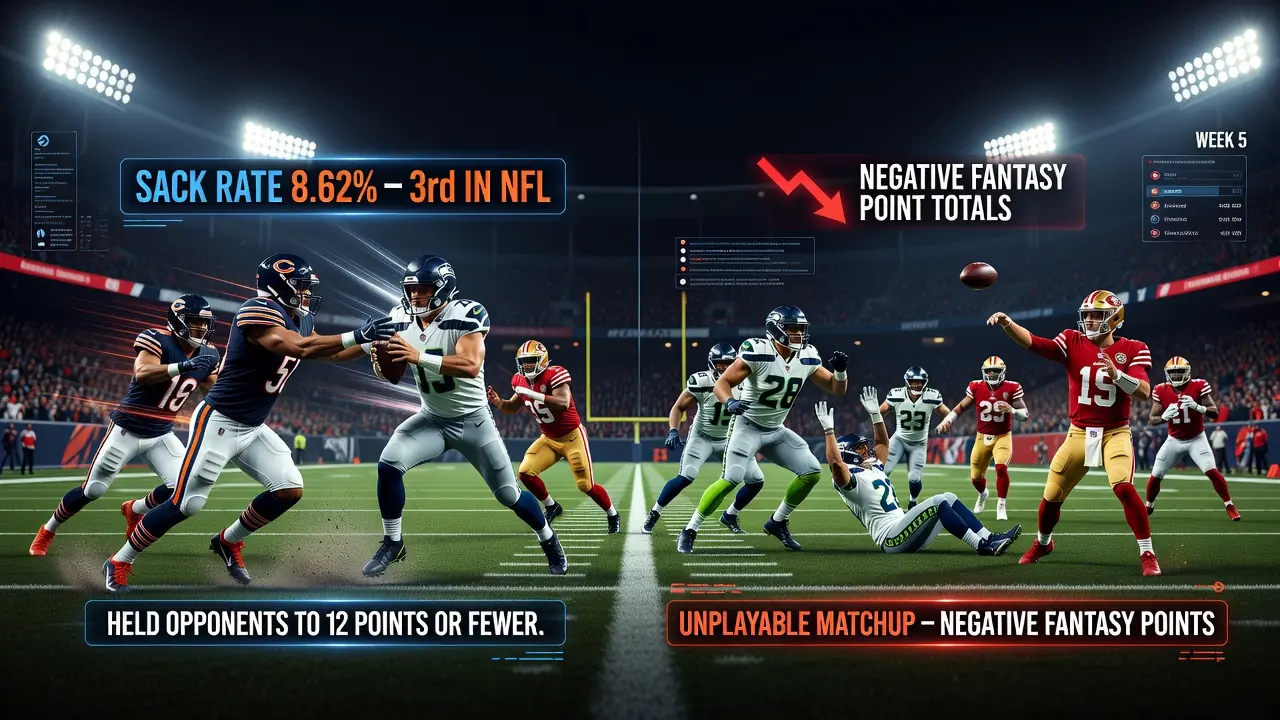
Fantasy defense remains the most volatile roster spot in weekly lineup construction, and Week 5 offers a clear illustration of why matchup data matters more than name recognition. The Bears have quietly built one of the league's most productive units since an opening-week stumble, while a historically reliable Seahawks defense now faces the toughest possible assignment against San Francisco's offense.
Why Sack Rate Has Become the Defining Metric
Pressure generation, not just turnovers, increasingly drives fantasy defense scoring. Chicago's defense sits third in the league in sack rate at 8.62%, a number that correlates strongly with disrupted quarterback rhythm and, by extension, more negative plays for opposing offenses. The Bears have held three consecutive opponents to 12 points or fewer, a stretch that reflects schematic consistency rather than a single fortunate outing. Cincinnati, just behind Chicago at 8.59%, benefits from a Miami offense that has yet to crack 14 points in any game this season and remains shorthanded at a key skill position. When a defense combines high pressure rates with an opposing offense that lacks explosive playmakers, fantasy managers get a rare combination of floor and ceiling in the same matchup.
Turnover Luck Versus Sustainable Production
Takeaways remain the most unpredictable input in defensive scoring, which is why distinguishing between a hot streak and a repeatable skill matters for weekly decisions. Dallas benefited from facing an undrafted rookie quarterback making his first NFL start, a scenario unlikely to recur against most opponents, but it illustrates how inexperienced signal-callers can inflate a defense's weekly ceiling regardless of that unit's underlying talent. Jacksonville presents a different case: eight takeaways across the season, tied for second-most in the league, paired with a Philadelphia offense that has surrendered some of the league's highest pressure and sack rates. That combination suggests the Jaguars' turnover production is being generated by legitimate pass-rush pressure rather than isolated bounces, making it a more sustainable source of fantasy points.
When to Avoid a Matchup Entirely
San Francisco's offense has made nearly every opposing defense unplayable this season. The four units that have faced the 49ers combined for negative fantasy points, Brock Purdy has not been sacked, and the team has allowed fewer than five sacks overall while committing only two giveaways. That profile eliminates even strong defenses like Seattle from consideration, regardless of reputation. Buffalo and Los Angeles' defenses face similar red flags: both have struggled against explosive offenses and lack the takeaway production to offset points allowed. Philadelphia's defense, despite early-season draft capital invested in the unit, has scored five or fewer fantasy points in every game and faces a Jacksonville offense trending upward, making it a clear bench candidate.
What This Means for Weekly Roster Strategy
Streaming defenses effectively requires weighing three factors together: pressure-generation metrics, opponent offensive health, and recent turnover trends. None of these signals is sufficient alone. A defense can post elite sack numbers and still be a poor play against a clean, turnover-averse offense, just as a unit with modest overall stats can be startable against a struggling or inexperienced quarterback. Tools that track pressure rates, pass-protection breakdowns and situational tendencies, such as those available through NFL Pro's Next Gen Stats dashboards, give managers a more reliable basis for these decisions than box-score reputation alone.