
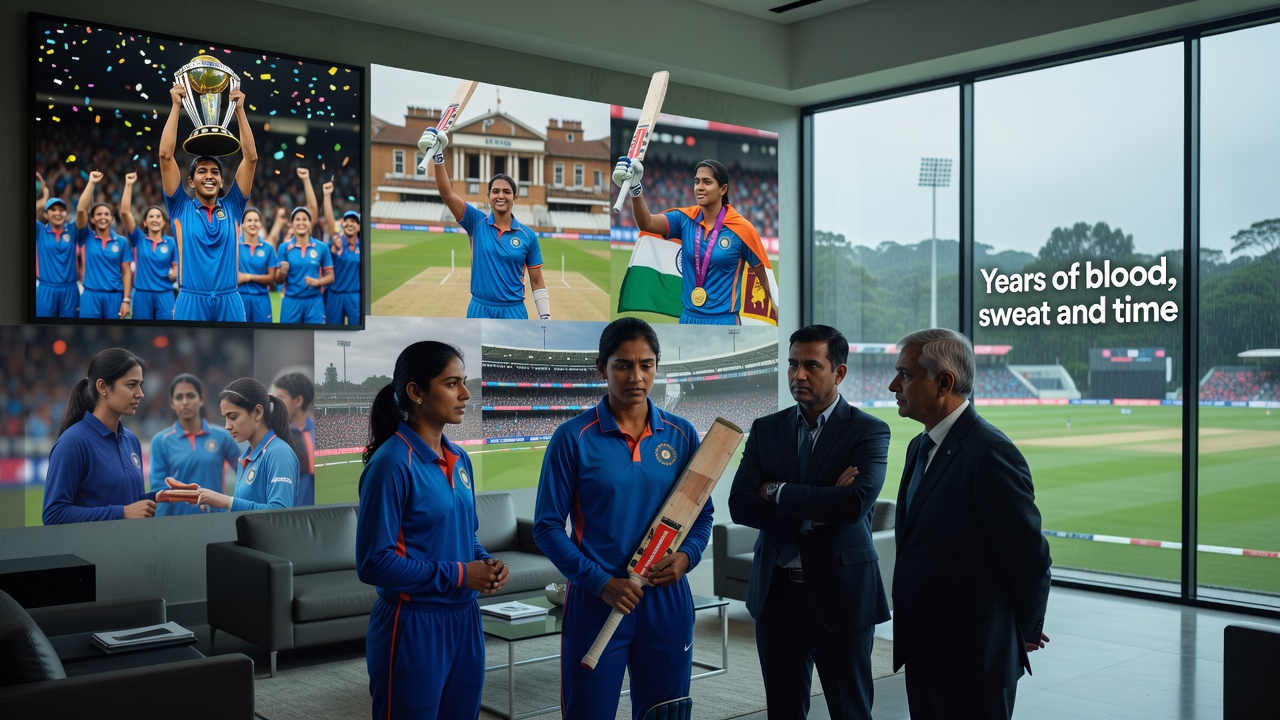
Harmanpreet Kaur has given up the captaincy of India's women's cricket team across Test, one-day and T20 formats, ending a tenure that began in 2012 and reshaped the national side's trajectory. The 37-year-old's departure follows a meeting in Guwahati with vice-captain Smriti Mandhana, head coach Amol Muzumdar and BCCI secretary Devajit Saikia, and comes just over a week after India's early exit from the T20 World Cup group stage.
A tenure defined by a historic breakthrough
Harmanpreet's leadership record speaks to longevity and influence rather than mere statistics: five Tests, 51 ODIs and 155 T20 internationals in charge. The defining moment arrived last year when she captained India to their first global title, lifting the 50-over World Cup. She also led the side to victory in a one-off Test at Lord's in July and guided India to a second successive Asian Games gold against Sri Lanka in September - her final match in the role. That mix of a landmark World Cup win alongside recent tournament disappointment frames the context for her exit: a captain leaving near the peak of achievement rather than in visible decline.
Why the timing matters
Cricket captaincy transitions rarely happen in isolation from team performance cycles, and this one is no exception. India's failure to reach the semi-finals of the T20 World Cup for a second consecutive edition will have prompted scrutiny inside the camp, even if Harmanpreet's own statement framed the decision as personal rather than forced. Her Instagram post described years of "blood, sweat, time" and decisions that were "not always understood," language that suggests the emotional weight of balancing individual ambition against team needs over more than a decade in charge. Leadership changes of this kind typically follow informal consultation well before any public announcement, and the meeting with Mandhana, Muzumdar and Saikia points to a managed handover rather than an abrupt break.
What comes next for India's women's team
Smriti Mandhana, 30, is widely expected to take over as captain, with India hosting Zimbabwe for three T20 internationals and three ODIs starting 16 October. That series will be the first real test of how the squad adapts to new leadership heading into a busy international calendar. For a team that has just won its first global trophy, the challenge for whoever takes the armband is less about building credibility and more about sustaining momentum - translating a World Cup win into consistent performances across formats, including the T20 game where India has recently struggled to advance deep into major tournaments.
Beyond the dressing room
Captaincy changes in international cricket carry commercial and institutional weight well beyond the playing eleven. Broadcasters, sponsors and the BCCI itself will be watching how a new captain is marketed and how the team's profile evolves, particularly given the growing commercial interest in women's cricket following India's recent successes. Harmanpreet's exit also underscores a broader pattern in elite sport: players stepping back from leadership not necessarily because of failure, but to extend their playing careers on their own terms. Her stated wish to "play for the love of the game again" suggests she intends to remain part of the squad as a batter, separating the burden of captaincy from her future as a player.