
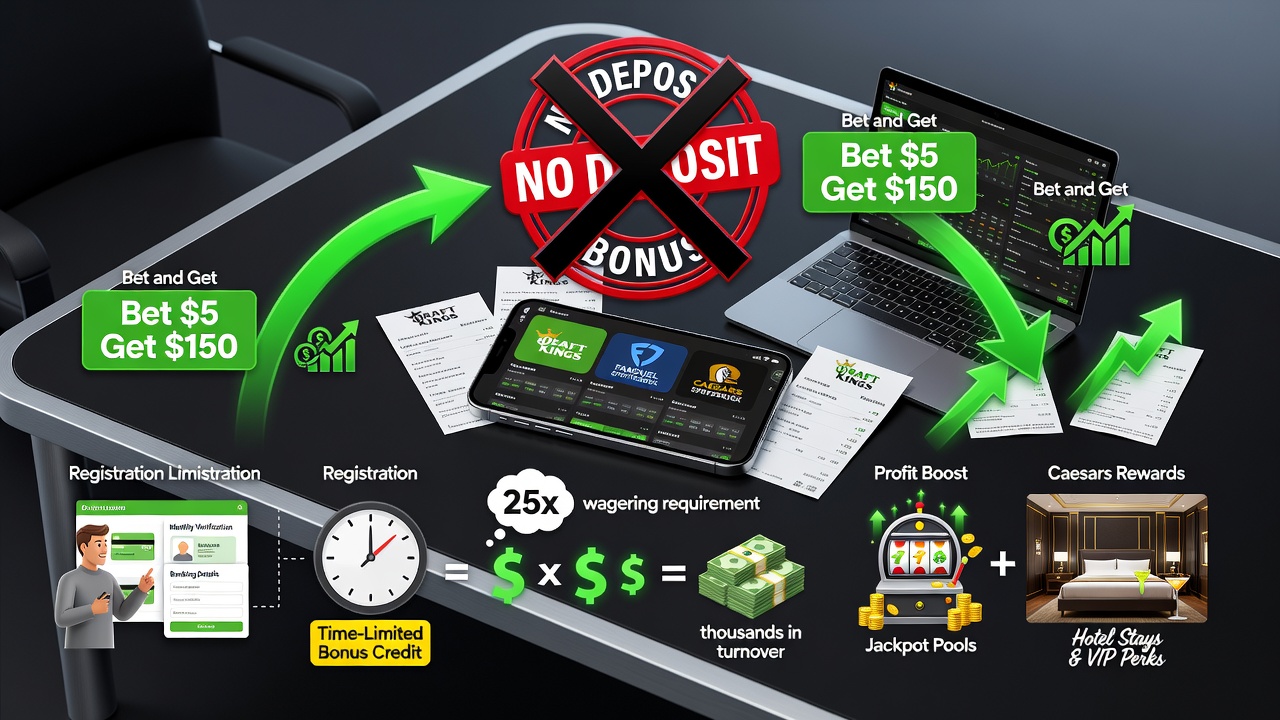
Few promotions in sports betting generate as much curiosity as the no deposit bonus - a credit offered without requiring a customer to fund their account first. The catch is that genuine no deposit offers have become increasingly rare among major licensed sportsbooks in the US market. Operators like DraftKings, FanDuel and Caesars have largely moved toward deposit-linked welcome offers instead, reshaping what new customers should realistically expect when they sign up.
Why No Deposit Offers Are Disappearing From Major Sportsbooks
Large, established sportsbooks now compete less on giving away something for nothing and more on structured first-bet offers. DraftKings, for instance, ties its welcome promotion to a small qualifying wager and an opening deposit rather than handing out bonus bets upfront. FanDuel follows a similar model, requiring a deposit and a losing first bet before bonus credit is issued. Caesars uses a "bet and get" structure, refunding a losing opening wager rather than offering free stakes from the outset.
This shift reflects commercial reality. No deposit bonuses carry real cost for operators with no guarantee a customer will ever deposit. Deposit-linked offers, by contrast, confirm genuine engagement and allow sportsbooks to calibrate promotional spend against actual customer value - a more sustainable approach as competition for market share continues.
How the Mechanics Actually Work
Where no deposit bonuses do exist, the structure is fairly consistent. A operator credits a small amount - often in the form of free bet credit - that can be used on selected markets without the customer risking their own funds first. Claiming one typically follows a predictable sequence: registration, identity and banking verification, and automatic allocation of the bonus once account setup is complete.
- Registration with any required promo code entered at sign-up
- Provision of banking details, mainly for verification and future transactions, not immediate deposit
- Time-limited bonus credit, usually requiring use within days of issue
- Wagering requirements that must be met before any winnings can be withdrawn
That last point is the one most often misunderstood. A wagering requirement is a multiplier applied to winnings generated from bonus funds, determining how much additional betting turnover is needed before a withdrawal becomes possible. A $10 free bet with a 25x requirement, for example, could mean turning over several thousand dollars in further wagers before cashing out - a detail buried in terms and conditions that deserves far more attention than the headline bonus figure itself.
Existing Customer Promotions Fill the Gap
With no deposit bonuses increasingly scarce, sportsbooks have leaned into loyalty-driven alternatives for existing users. DraftKings offers profit boosts, jackpot pools and a rewards shop built around ongoing betting activity. FanDuel concentrates on profit-boosted odds across major leagues. Caesars Rewards extends beyond bonus bets into redeemable credits for hospitality and leisure services, reflecting its casino-industry heritage. None of these promotions eliminate cost or risk - they simply reward continued spend rather than first-time sign-up.
What Bettors Should Weigh Before Claiming Any Offer
Promotional structures are built around growth targets, not customer generosity for its own sake. Understanding the full terms - minimum deposits, qualifying bet sizes, wagering multipliers and expiry windows - matters more than the advertised headline figure. These offers can provide a lower-cost way to test a new platform, but they do not alter the underlying mathematics of sports betting, where the house maintains a structural edge regardless of bonus activity.
Consumers should treat all betting promotions, deposit-linked or otherwise, as marketing tools rather than financial opportunities. Anyone finding it difficult to control spending or time dedicated to betting should consult the responsible gambling resources offered by every licensed operator, including deposit limits, self-exclusion tools and links to independent support services.