
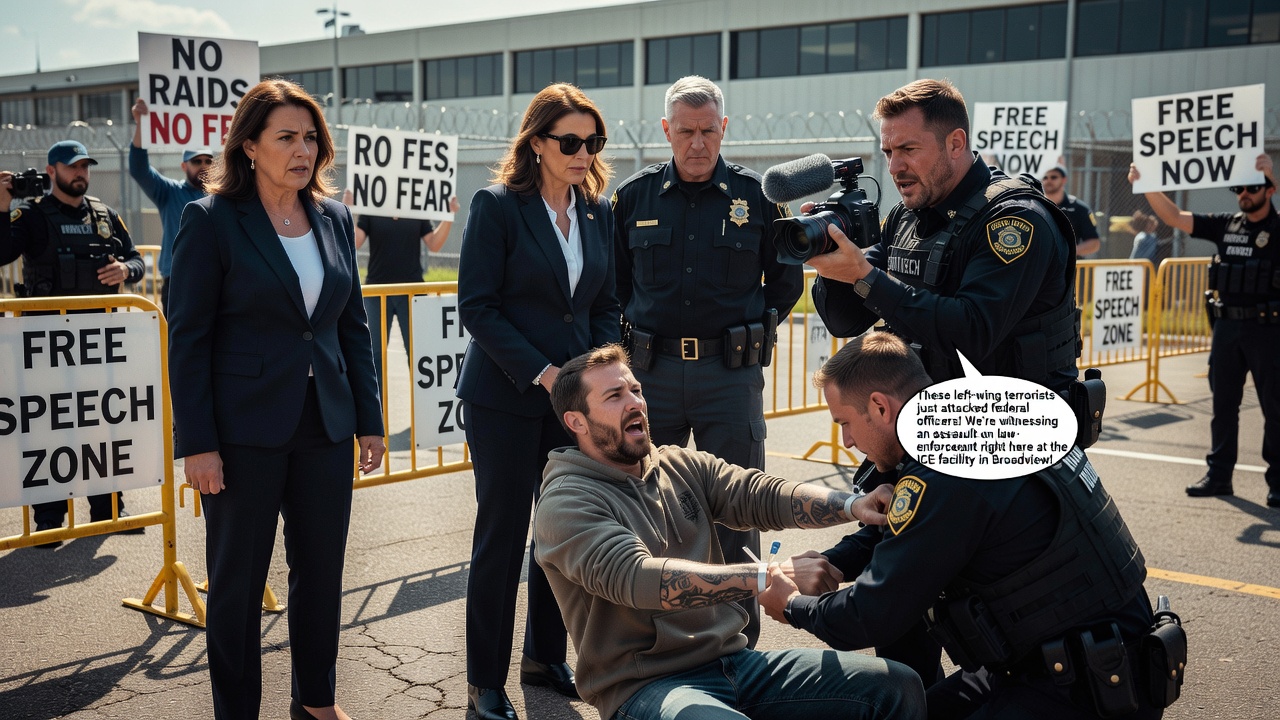
Two protesters detained outside an immigration enforcement facility in Broadview, Illinois, are suing conservative media personality Benny Johnson, accusing him of falsely branding them "left-wing terrorists" who attacked federal officers. The lawsuit, filed Friday, centers on video Johnson recorded while embedded with then-Homeland Security Secretary Kristi Noem and Border Patrol official Gregory Bovino, raising fresh questions about how partisan content creators are being woven into federal enforcement operations.
A Lawsuit Built on Disputed Footage
According to the complaint, plaintiff Kyle Frankovich was standing in a designated "free speech" area near the ICE facility when he was thrown to the ground and arrested. Johnson's video, however, claimed Frankovich and others had assaulted ICE officers. Both Frankovich and co-plaintiff Maureen Foody were released without charges, and the lawsuit alleges Johnson knew the assault characterization was false when he published it. Johnson has millions of followers across social platforms, and the footage also aired on Fox News, amplifying its reach well beyond his own channels.
When Influencers Become Enforcement Messengers
The case highlights a broader dynamic in how federal agencies now communicate with the public. Embedding sympathetic content creators alongside officials during enforcement actions blurs the line between independent journalism and government messaging. Rachel Goodman of Protect Democracy, a legal nonprofit not involved in this suit, described this as part of a deliberate strategy: using politically aligned influencers to shape narratives in ways traditional, nonpartisan reporting would not permit. Unlike government officials, who generally enjoy immunity from defamation claims, independent content creators like Johnson do not - a distinction that may explain why this suit targets him directly rather than the officials he accompanied.
Consequences Beyond the Courtroom
The plaintiffs say the reputational damage was immediate and tangible. Frankovich, a data scientist at Harvard, says images of him in zip ties - his tattoos clearly visible - were later used in ICE recruiting material, while social media users falsely labeled him an antifa leader in Chicago. He and his partner altered daily routines, avoiding walking alone, after seeing posts urging followers to locate and confront him. Foody, a court reporter, reports similar fears of professional and physical fallout. These accounts illustrate how quickly online mischaracterization can translate into real-world safety concerns, regardless of whether criminal charges ever materialize.
Why This Case Matters for Media Accountability
Defamation suits against influencers are rare and difficult to win, requiring proof that false statements were made knowingly or with reckless disregard for the truth. If successful, this case could set a meaningful precedent for holding partisan media figures accountable when their content, amplified by large platforms and even traditional broadcasters, causes documented harm to private individuals. It also underscores a growing tension in digital media: as enforcement agencies increasingly rely on influencer-driven content to shape public perception, the legal and ethical boundaries governing that relationship remain largely untested.