
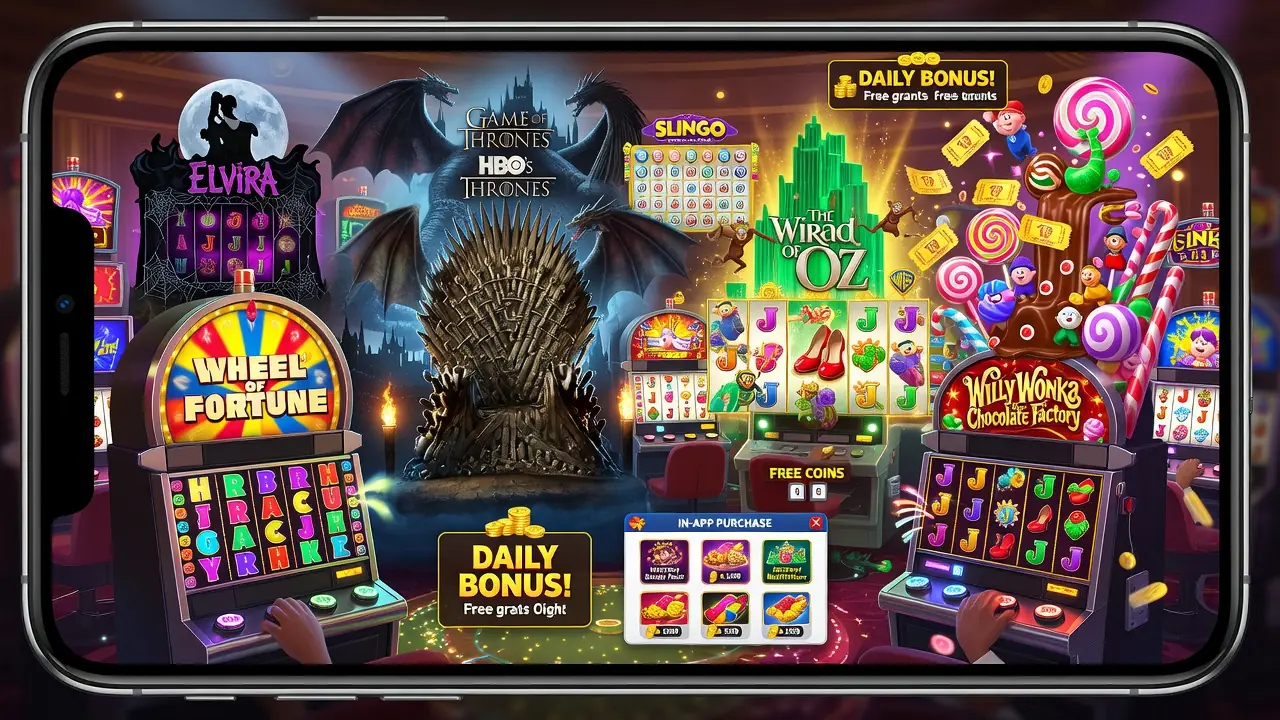
Hit It Rich! Casino Slots, published by Zynga, illustrates a business model that has quietly reshaped mobile entertainment over the past decade: the social casino. The app bundles dozens of slot-style games under one roof, many of them built around licensed franchises such as Wheel of Fortune, Game of Thrones, The Wizard of Oz and Willy Wonka & the Chocolate Factory. No real money changes hands in play, yet the product sits at the intersection of entertainment, intellectual property licensing and consumer spending.
A Genre Built on Simulated Stakes
Social casino apps replicate the mechanics of slot machines, roulette wheels and card games without offering real-money payouts. Players spin reels, trigger bonus rounds and chase in-game jackpots using virtual currency. Hit It Rich! follows this template closely, offering starting coin grants, daily bonuses and recurring bonus games designed to extend play sessions. Because outcomes have no cash value, these products generally fall outside the gambling regulation that governs licensed betting and casino operators, even though the underlying game mechanics, from reel symbols to volatility curves, closely mirror real slot machines.
That distinction matters. Regulators who oversee online gambling typically require licensing, age verification and responsible-gambling tools because real money is at risk. Social casinos operate under consumer protection and app-store rules instead, which creates a lighter compliance burden but also raises a recurring policy question: whether games that look and feel like gambling should carry some of the same safeguards, particularly for younger or vulnerable users.
The Licensing Engine Behind the Reels
What differentiates Hit It Rich! from a generic slots app is its portfolio of branded titles. Wheel of Fortune, HBO's Game of Thrones, Warner Bros.' Wizard of Oz and Willy Wonka properties, Elvira, and Slingo from Gaming Realms are all licensed intellectual property stitched into a single platform. This is a familiar strategy in digital entertainment: pairing recognizable franchises with repeatable game loops to drive engagement and retention. For rights holders, it is a secondary revenue stream with minimal production cost. For Zynga, it is a way to differentiate an otherwise crowded slots category where mechanics are largely interchangeable.
Monetization Through Optional Purchases
The app is free to download, but its economics depend on in-app purchases, including paid random items. Zynga discloses that drop-rate information for these items is available within the game itself, a transparency practice that has become more common across mobile gaming following scrutiny of loot-box mechanics in several jurisdictions. The free coin grants and daily bonuses function as acquisition and retention tools, encouraging continued play before monetization points are introduced.
- No real-money gambling or prize payouts are offered, per the publisher's own disclosure.
- Success in the app does not translate into, or predict, outcomes in real-money gambling.
- In-app purchases can be managed or disabled through device settings.
- The product is positioned for an adult audience, though social casino games have faced broader scrutiny over age-appropriate design.
Why This Category Keeps Drawing Scrutiny
Social casinos occupy a gray zone that consumer advocates and some regulators have flagged repeatedly: games that simulate gambling psychology, including near-misses, variable rewards and escalating bonus rounds, without triggering gambling-specific oversight. Zynga's own disclosure that "practice or success at social gaming does not imply future success at real money gambling" reflects an industry-wide acknowledgment of this concern. As mobile gaming revenue increasingly depends on behavioral design rather than upfront pricing, the line between entertainment product and gambling-adjacent experience remains a live issue for platform policy, advertising standards and data privacy frameworks governing how user behavior is tracked and monetized.