
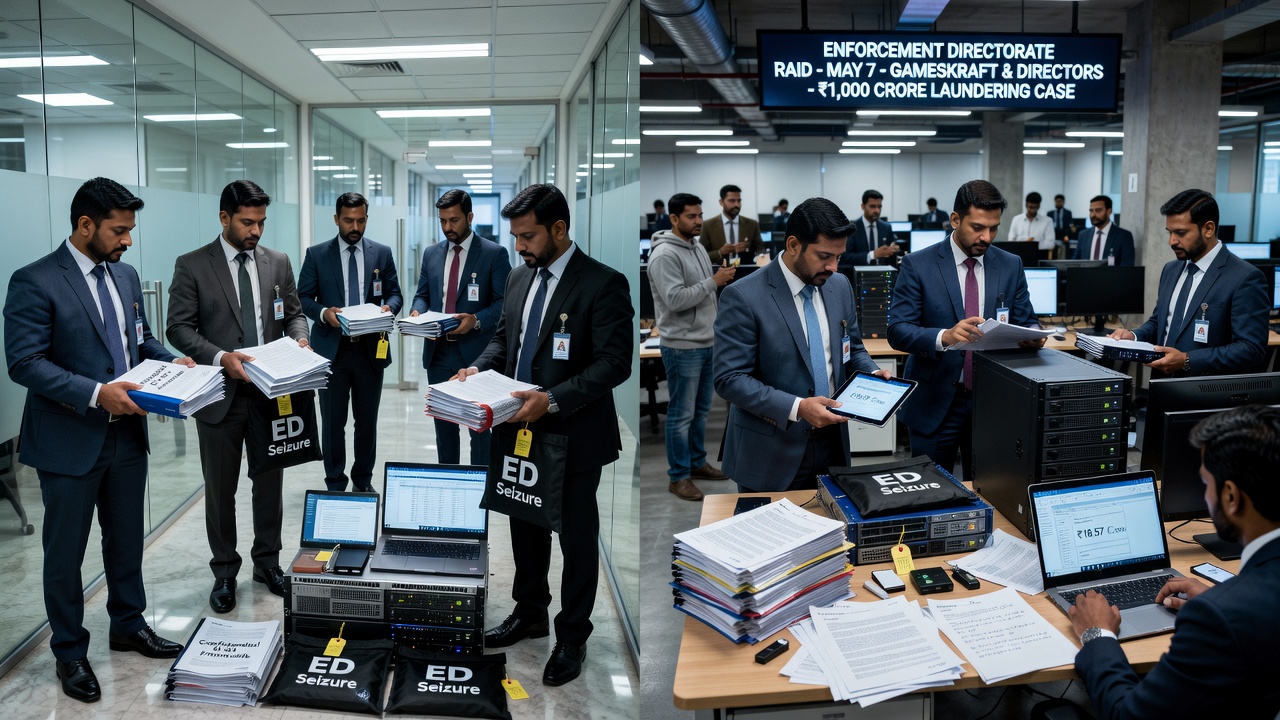
Enforcement Directorate officials fanned out across Delhi-NCR, Bengaluru and several other cities on Thursday, May 7, executing search operations tied to an alleged ₹1,000 crore money laundering case rooted in online gaming and betting activity. The raids, conducted by the agency's Bengaluru Zonal Office, targeted M/s Gameskraft Technologies Pvt Ltd, its directors and other individuals connected to disputed online betting operations. Officials seized documents, digital records and electronic devices as the probe under the Prevention of Money Laundering Act continues to widen.
This is not the first time Gameskraft and related entities have drawn scrutiny. A separate round of searches last year focused on different allegations, but the current action stems from fresh FIRs filed by Karnataka Police, later escalated into a full PMLA investigation. Those complaints centered on Pocket52, a gaming platform operated by M/s Nirdesa Networks Pvt. Ltd., where users alleged manipulated outcomes, restricted withdrawals and opaque mechanics. Questions about how algorithmic systems determine outcomes are not unique to this case - similar debates have surfaced around games like lightning dice payouts, where players often struggle to verify whether displayed odds match actual return structures, underscoring a broader transparency gap across digital wagering products. lightning dice payouts
What the Investigation Has Uncovered So Far
According to the ED, one complainant alone claimed losses exceeding ₹3 crore, pointing to what investigators describe as systematic exploitation rather than isolated technical glitches. Multiple users flagged concerns about player collusion and unfair algorithmic practices, allegations that, if substantiated, would suggest deliberate design choices rather than accidental platform failures. The agency has accused the company of knowingly exploiting users without offering compensation, a claim that will need to withstand judicial scrutiny before any final determination is made.
Escrow Accounts and Regulatory Gaps
A significant thread in this case involves money that should have already reached users. Despite restrictions under the Online Gaming Promotion and Regulation Act, 2025, more than ₹30 crore reportedly remained locked in escrow accounts instead of being returned to gamers. The ED has frozen eight escrow accounts holding roughly ₹18.57 crore, suspecting these funds represent proceeds of crime. Escrow mechanisms exist precisely to protect user deposits during disputes, so allegations that funds were withheld beyond legal timelines raise pointed questions about internal compliance controls and the adequacy of oversight during the transition to the new regulatory framework.
Why This Case Matters Beyond One Company
India's online gaming sector has expanded rapidly, often faster than the regulatory scaffolding meant to govern it. Cases like this test how effectively new legislation can be enforced once platforms are already operating at scale with large user bases and complex payment flows. For consumers, the episode is a reminder that platform claims about fairness, payout structures and withdrawal processes are not always independently verifiable in real time. For operators and payment intermediaries, it signals that regulators are willing to treat unresolved user complaints as potential predicates for money laundering investigations, not just consumer disputes to be settled quietly.