
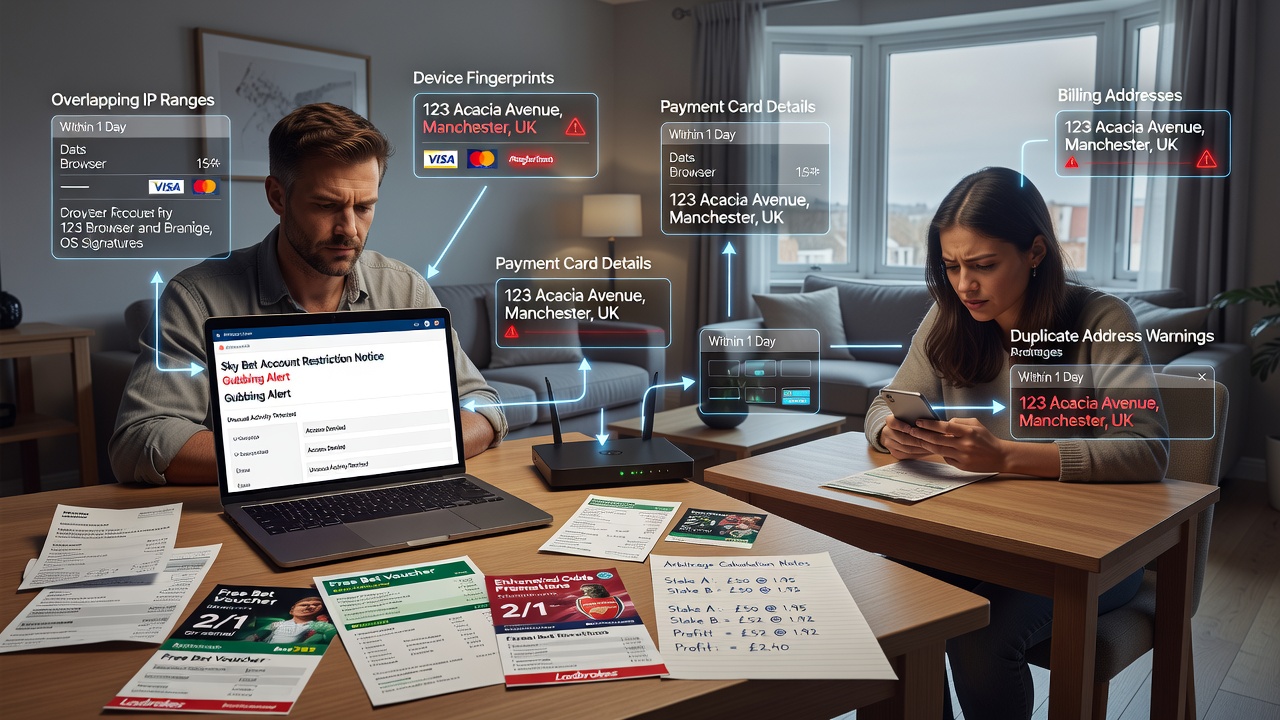
A matched bettor with several years of experience is weighing whether to introduce a partner to the practice, but only on accounts already restricted in their own name. The case, drawn from a long-running forum thread, exposes a structural weakness in how bookmakers police household-level risk: identity checks are built around individuals, yet the exposure they are trying to manage is shared across addresses, devices and bank accounts.
Why Bookmakers Restrict Accounts in the First Place
Bookmakers operate on margin, not on even odds. When a customer consistently backs value created by free bets, enhanced prices or arbitrage opportunities, that customer extracts a profit the bookmaker's pricing model did not intend to pay out. Firms respond by limiting stakes or closing accounts entirely, a practice bettors commonly call "gubbing." This is not formally unlawful discrimination in most jurisdictions, because private gambling operators are generally free to decide who they trade with, subject to licensing conditions and anti-money-laundering obligations. It is, however, a persistent source of friction between operators and a subculture of bettors who treat promotional offers as a calculable source of return rather than entertainment.
Household Detection Is Now Standard Practice
The anecdotes shared in the thread show a consistent pattern: accounts opened at an address already linked to a restricted profile tend to attract scrutiny quickly, regardless of differing surnames, banks or email addresses. Operators cross-reference device identifiers, IP ranges, payment card details and address data as part of standard fraud and bonus-abuse controls. A VPN or mobile data connection can obscure some technical signals, but it does nothing to change the billing address or the banking relationship, which remain the more durable identifiers. Some firms, such as Sky Bet in the examples described, flag duplicate addresses within a day; others allow an account to run for weeks or months before intervening. There is no universal timetable, because each operator sets its own risk thresholds and applies them inconsistently even internally.
Phoning Ahead Rarely Changes the Outcome
Contacting live chat before opening an account is unlikely to produce a clear answer. Customer service staff generally cannot pre-approve an account against internal risk models, and asking directly may simply flag the inquiry for closer review. The more consequential decision is behavioural: using the same device, the same betting pattern, or placing bets on the same markets at the same time as an existing restricted account on the same connection increases the likelihood of a shared-household flag. Separating financial and technical footprints as far as practically possible reduces but does not eliminate that risk.
What This Means for Anyone Considering It
The practical lesson from the shared experiences is that outcomes vary widely and cannot be predicted with confidence. Some accounts survive for months and continue receiving promotional offers; others close within hours of registration. For a partner hoping to replicate years of consistent activity, the realistic expectation should be short-term, limited-value access to free bets and sign-up offers rather than a durable, long-term setup. That has implications beyond convenience: closed accounts can leave funds temporarily tied up, and repeated restrictions across a household may eventually prompt a bookmaker to treat all linked accounts, including ones still in good standing, as a single higher-risk unit. Anyone considering this route should treat it as a modest, time-limited exercise rather than an extension of an established matched-betting operation, and should be aware that regulatory and compliance frameworks increasingly support operators' right to manage this kind of linked-account exposure as they see fit.